
Donkey Secondary Antibodies

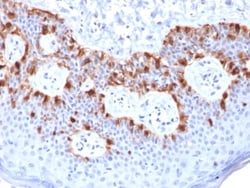
Biotium MART-1 / Melan-A / MLANA (Melanoma Marker) (rMLANA/788), CF647 conjugate, 0.1mg/mL
This antibody recognizes a protein doublet of 20-22 kDa, identified as MART-1 (Melanoma Antigen Recognized by T cells 1) or Melan-A. MART-1 is a newly identified melanocyte differentiation antigen recognized by autologous cytotoxic T lymphocytes. Seven other melanoma associated antigens recognized by autologous cytotoxic T cells include MAGE-1, MAGE-3, tyrosinase, gp100, gp75, BAGE-1, and GAGE-1. Subcellular fractionation shows that MART-1 is present in melanosomes and endoplasmic reticulum. This MAb labels melanomas and other tumors showing melanocytic differentiation. It is also a useful positive-marker for angiomyolipomas. It does not stain tumor cells of epithelial, lymphoid, glial, or mesenchymal origin.Primary antibodies are available purified, or with a selection of fluorescent CF Dyes and other labels. CF Dyes offer exceptional brightness and photostability. Note: Conjugates of blue fluorescent dyes like CF405S and CF405M are not recommended for detecting low abu


Jackson Immuno Research Labs Peroxidase AffiniPure F(ab')₂ Fragment Donkey Anti-Mouse IgG (H+L), .3ml
Peroxidase-AffiniPure F(ab')2 Fragment Donkey Anti-Mouse IgG (H+L) (min X Bov,Ck,Gt,GP,Sy Hms,Hrs,Hu,Rb,Shp Sr Prot)
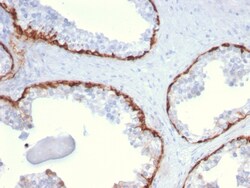
Biotium Cytokeratin 15 (Esophageal Squamous Cell Carcinoma Marker)(KRT15/2959), CF488A conjugate, 0.1mg/mL
Keratin 15 is a type I keratin which is expressed only in basal keratinocytes in stratified epithelia and does not appear to have a natural type II expression partner. Keratin 15 is down regulated in activated keratinocytes. Cytokeratin 15 is a specific marker of stem cells of the hair-follicle bulge and may be a useful marker for diagnosis between basal cell carcinoma (BCC) and trichoepithelioma. Trichoblastoma are benign neoplasms of follicular differentiation frequently found in nevus sebaceous. Many morphologic features are shared with nodular basal cell carcinoma, sometimes rendering a diagnosis difficult. Trichoblastoma and BCC show variable expression of Cytokeratin 15 and Cytokeratin 19, and absence of hair keratins. Primary antibodies are available purified, or with a selection of fluorescent CF Dyes and other labels. CF Dyes offer exceptional brightness and photostability. Note: Conjugates of blue fluorescent dyes like CF405S and CF405M are not recommended for
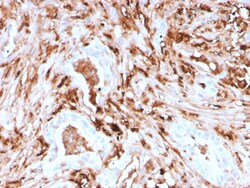
Biotium Ferritin, Light Chain (Node-Negative Breast Tumor Prognostic Marker)(rFTL/1388), CF647 conjugate, 0.1mg/mL
Mammalian ferritins consist of 24 subunits made up of 2 types of polypeptide chains, ferritin heavy chain and ferritin light chain. Ferritin heavy chains catalyze the first step in iron storage, the oxidation of Fe (II), whereas ferritin light chains promote the nucleation of ferrihydrite, enabling storage of Fe (III). Light chain ferritin is involved in cataracts by at least two mechanisms, hereditary hyperferritinemia cataract syndrome, in which light chain ferritin is overexpressed, and oxidative stress, an important factor in the development of ageing-related cataracts. Primary antibodies are available purified, or with a selection of fluorescent CF Dyes and other labels. CF Dyes offer exceptional brightness and photostability. Note: Conjugates of blue fluorescent dyes like CF405S and CF405M are not recommended for detecting low abundance targets, because blue dyes have lower fluorescence and can give higher non-specific background than other dye colors.
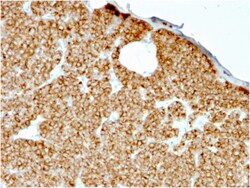
Biotium Parathyroid Hormone (PTH) (N-Terminal)(rPTH/911), CF647 conjugate, 0.1mg/mL
Epitope of this MAb maps in the N-terminus of PTH, a hormone produced by the parathyroid gland that regulates the concentration of calcium and phosphorus in extracellular fluid. This hormone elevates blood Ca2 levels by dissolving the salts in bone and preventing their renal excretion. It is produced in the parathyroid gland as an 84 amino acid single chain polypeptide. It can also be secreted as N-terminal truncated fragments or C-terminal fragments after intracellular degradation, as in case of hypercalcemia. Defects in this gene are a cause of familial isolated hypoparathyroidism (FIH); also called autosomal dominant hypoparathyroidism or autosomal dominant hypocalcemia. FIH is characterized by hypocalcemia and hyperphosphatemia due to inadequate secretion of parathyroid hormone. Symptoms are seizures, tetany and cramps. FIH exist both as autosomal dominant and recessive forms of hypoparathyroidism. Primary antibodies are available purified, or with a selection of fluores

Biotium CD30 / TNFRSF8 (Hodgkin & Reed-Sternberg Cell Marker) (rKi-1/779), CF647 conjugate, 0.1mg/mL
This antibody recognizes a single chain glycoprotein of 105/120 kDa, identified as CD30/Ki-1. CD30 is synthesized as a 90 kDa precursor, which is processed in the Golgi complex into a membrane-bound phosphorylated mature 105/120 kDa glycoprotein. In Hodgkin's disease, CD30/Ki-1 antigen is expressed by mononuclear-Hodgkin and multinucleated Reed-Sternberg cells. It is also expressed by the tumor cells of a majority of anaplastic large cell lymphomas as well as by a varying proportion of activated T and B cells. This MAb distinguishes large cell lymphomas derived from activated lymphoid cells from histiocytic malignancies and lymphomas derived from resting and precursor lymphoid cells or from anaplastic carcinomas. About one third of the Ki-1 positive lymphomas lack the leukocyte common antigen (CD45).Primary antibodies are available purified, or with a selection of fluorescent CF Dyes and other labels. CF Dyes offer exceptional brightness and photostability. Note: Conjugate

Biotium Primary Antibody Mouse IgG1 Fc N2504.M1FC CF647 1/EA
Anti-Mouse IgG1 (Fc) rVHH (N2504 M1FC) is a recombinant Alpaca VHH antibody that recognizes the Fc fragment of mouse IgG1 and is validated for IF flow and WB Far-red fluorescent STORM-compatible CF647 dye has Ex/Em at 650/665 nm Unit size 500 uL at 0 1 mg/mL

Biotium Primary Antibody NeuN rA60 CF647 1/EA
NeuN (rA60) is a recombinant mouse monoclonal antibody that recognizes neuron-specific protein NeuN This CF647 antibody conjugate has been validated in Immunofluorescence CF and reg dyes are Biotiums line of next-generation fluorescent dyes with advantages in brightness and photostability
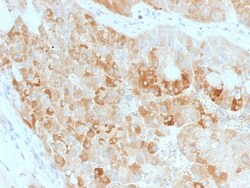
Biotium ROR2(ROR2/1911), CF647 conjugate, 0.1mg/mL
ROR2 (receptor tyrosine kinase-like orphan receptor 2), also known as neurotrophic tyrosine kinase receptor-related 2 (NTRKR2), is a single pass transmembrane tyrosine-protein kinase receptor. It contains a cytoplasmic tyrosine kinase domain, distally located serine-threonine-rich domains, an extracellular immunoglobulin-like domain, a cysteine-rich domain and a kringle domain. ROR2 is important for skeletal and endocrine development and is required for cartilage and growth plate development. It promotes the differentiation of osteoblasts and plays an important role in the early formation of chondrocytes. ROR2 sequesters and associates with Dlxin-1 affecting the transcriptional function of Msx-2. ROR2 also interacts with canoncial Wnt-1 and Wnt-3, regulating their signaling pathways. Defects in ROR2 can result in the autosomal dominant skeletal disorder, brachydactyly type B1, or the autosomal recessive skeletal disorder, Robinow syndrome. Primary antibodies are available pur
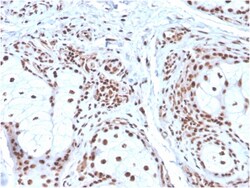
Biotium Nucleophosmin (Acute Myeloid Leukemia Marker)(NPM1/3286), CF647 conjugate, 0.1mg/mL
Recognizes a 33 kDa glycoprotein, identified as Nucleophosmin (NPM). It is predominantly localized in the nucleus of cells in most tissues. NPM is involved in ribosomal assembly and rRNA transport. It is an abundant protein that is highly phosphorylated by Cdc2 kinase during mitosis. This phosphoprotein moves between the nucleus and the cytoplasm. It is thought to be involved in several processes including regulation of the ARF/p53 pathway. A number of genes are fusion partners, in particular the anaplastic lymphoma kinase gene on chromosome 2. Mutations in exon 12 affecting the C-terminus of the protein are associated with an aberrant cytoplasmic location. Mutations in this gene are associated with acute myeloid leukemia. The antibody may be a useful aid for classification of acute myeloid leukemia. Primary antibodies are available purified, or with a selection of fluorescent CF Dyes and other labels. CF Dyes offer exceptional brightness and photostability. Note: Conjugat
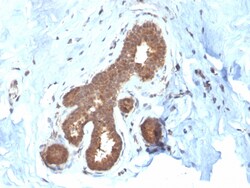
Biotium Glutathione S-Transferase Mu2 (GSTM2)(CPTC-GSTMu2-2), CF647 conjugate, 0.1mg/mL
Recognizes Glutathione S-Transferase of the mu class, which is involved in the detoxification of toxins, drugs, and products of oxidative stress by conjugation with glutathione. Primary antibodies are available purified, or with a selection of fluorescent CF Dyes and other labels. CF Dyes offer exceptional brightness and photostability. Note: Conjugates of blue fluorescent dyes like CF405S and CF405M are not recommended for detecting low abundance targets, because blue dyes have lower fluorescence and can give higher non-specific background than other dye colors.
Jackson Immuno Research Labs Alexa Fluor 488 AffiniPure Fab Fragment Donkey Anti-Mouse IgG (H+L), .75mg
Alexa Fluor 488-AffiniPure Fab Fragment Donkey Anti-Mouse IgG (H+L)
Biotium Tyrosinase (Melanoma Marker) (TYR/2024R), CF647 conjugate, 0.1mg/mL
This antibody recognizes a cluster of proteins between 70-80 kDa, identified as tyrosinase. Occasionally a minor band at 55 kDa is also detected. This MAb shows no cross-reaction with MAGE-1 and tyrosinase-related protein 1, TRP-1/gp75. Tyrosinase is a copper-containing metalloglycoprotein that catalyzes several steps in the melanin pigment biosynthetic pathway; the hydroxylation of tyrosine to L-3,4-dihydroxy-phenylalanine (dopa), and the subsequent oxidation of dopa to dopaquinone. Mutations of the tyrosinase gene occur in various forms of albinism. Tyrosinase is one of the targets for cytotoxic T-cell recognition in melanoma patients. Staining of melanomas with this MAb shows tyrosinase in melanotic as well as amelanotic variants. This MAb is a useful marker for melanocytes and melanomas.Primary antibodies are available purified, or with a selection of fluorescent CF Dyes and other labels. CF Dyes offer exceptional brightness and photostability. Note: Conjugates of blue fluo
Biotium AMACR / p504S (Prostate Cancer Marker) (AMACR/1723), CF647 conjugate, 0.1mg/mL
This antibody recognizes a protein of 42 kDa, which is identified as Alpha-methylacyl-CoA Racemase (AMACR), also known as p504S. It is an enzyme that is involved in bile acid biosynthesis and beta-oxidation of branched-chain fatty acids. AMACR is essential in lipid metabolism. It is expressed in cells of premalignant high-grade prostatic intraepithelial neoplasia (HGPIN) and prostate adenocarcinoma. The majority of the carcinoma cells show a distinct granular cytoplasmic staining reaction. AMACR is present at low or undetectable levels in glandular epithelial cells of normal prostate and benign prostatic hyperplasia. A spotty granular cytoplasmic staining is seen in a few cells of the benign glands. AMACR is expressed in normal liver (hepatocytes), kidney (tubular epithelial cells) and gall bladder (epithelial cells). Expression has also been found in lung (bronchial epithelial cells) and colon (colonic surface epithelium). AMACR expression can also be found in hepatocellular

Rockland Immunochemicals Anti-MOUSE IgG (H&L) (DONKEY) Antibody DyLight™ 680 Conjugated (Min X Bv Ch Gt GP Ham Hs Hu Rb Rt & Sh Serum Proteins) - 610-744-124
Anti-Mouse IgG DyLight™680 Antibody generated in donkey detects reactivity to Mouse IgG. No reaction was observed against Bovine, Chicken, Goat, Guinea Pig, Hamster, Horse, Human, Rabbit, Rat and Sheep Serum Proteins. This antibody will react with heavy chains of mouse IgG and with light chains of most mouse immunoglobulins. Secondary Antibodies are available in a variety of formats and conjugate types. When choosing a secondary antibody product, consideration must be given to species and immunoglobulin specificity, conjugate type, fragment and chain specificity, level of cross-reactivity, and host-species source and fragment composition. This product is designed for IF, fluorescence based plate assays (FLISA) and fluorescent WB.